Trump's 'Shield of Americas' Coalition Raises Democratic Concerns
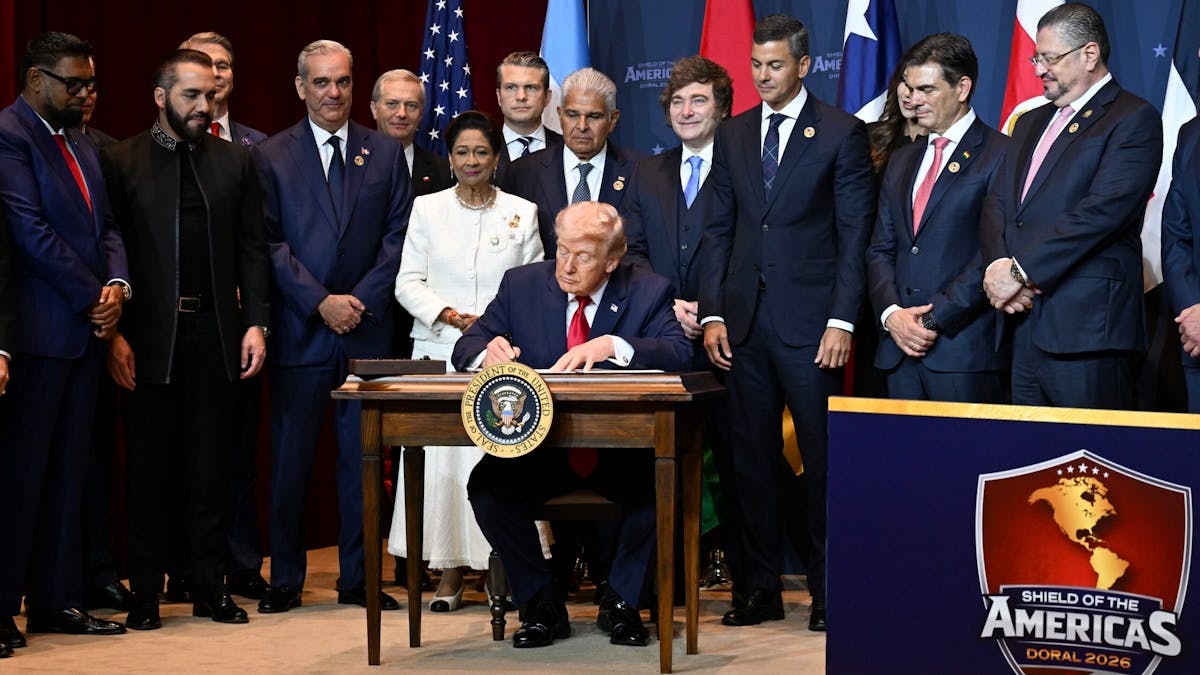
President Donald Trump's latest foreign policy initiative, the "Shield of the Americas" coalition, launched Saturday in Florida with Latin American leaders, has sparked debate about democratic governance and human rights implications across the region.
A Controversial Approach to Regional Security
The summit brought together at least a dozen leaders from Central America, South America, and the Caribbean, ostensibly to combat drug cartels. However, Trump's rhetoric and the guest list raise significant questions about the administration's commitment to democratic values and human rights.
During his 30-minute opening address, Trump made several concerning statements, including suggesting the United States could use missiles against cartel leaders if partner nations requested it. He also made dismissive comments about learning Spanish, telling the predominantly Spanish-speaking audience, "I'm not learning your damn language. I don't have time."
Troubling Alliances and Democratic Backsliding
The summit's attendee list reflects a troubling pattern of embracing authoritarian-leaning leaders. Among those present was Salvadoran President Nayib Bukele, whose mass incarceration policies have drawn criticism from human rights organizations worldwide.
Also in attendance was Honduran President Nasry Asfura, who won a disputed election with Trump's backing, raising questions about electoral integrity and democratic legitimacy in the region.
These alliances suggest a concerning shift away from supporting democratic institutions and toward embracing strongman tactics, even when they violate basic human rights principles.
The China Factor and Strategic Competition
While Trump didn't explicitly mention China, his warnings about "hostile foreign influence" in the Western Hemisphere clearly targeted Beijing's growing economic presence in the region. China's trade with Latin America reached approximately $518 billion in 2024, with Beijing extending over $120 billion in loans across the hemisphere.
This framing of regional relationships through the lens of great power competition risks reducing complex social and economic challenges to simplistic geopolitical narratives, potentially undermining genuine cooperation on shared challenges.
Missing Voices and Democratic Deficit
Notably absent from Trump's coalition are many of the region's more democratic and progressive leaders, suggesting this initiative may further polarize Latin American politics rather than build genuine consensus around shared challenges.
The emphasis on military solutions and strongman approaches to complex social problems like drug trafficking ignores decades of evidence showing that sustainable security requires addressing root causes like inequality, corruption, and lack of economic opportunity.
Implications for Democratic Governance
Trump's "Shield of the Americas" represents a concerning departure from traditional U.S. support for democratic institutions and human rights in the region. By embracing leaders with questionable democratic credentials and promoting military solutions to social problems, this coalition risks undermining the very democratic values it claims to protect.
As citizens and advocates for democratic governance, we must remain vigilant about initiatives that prioritize short-term security theater over long-term democratic stability and human rights protection.