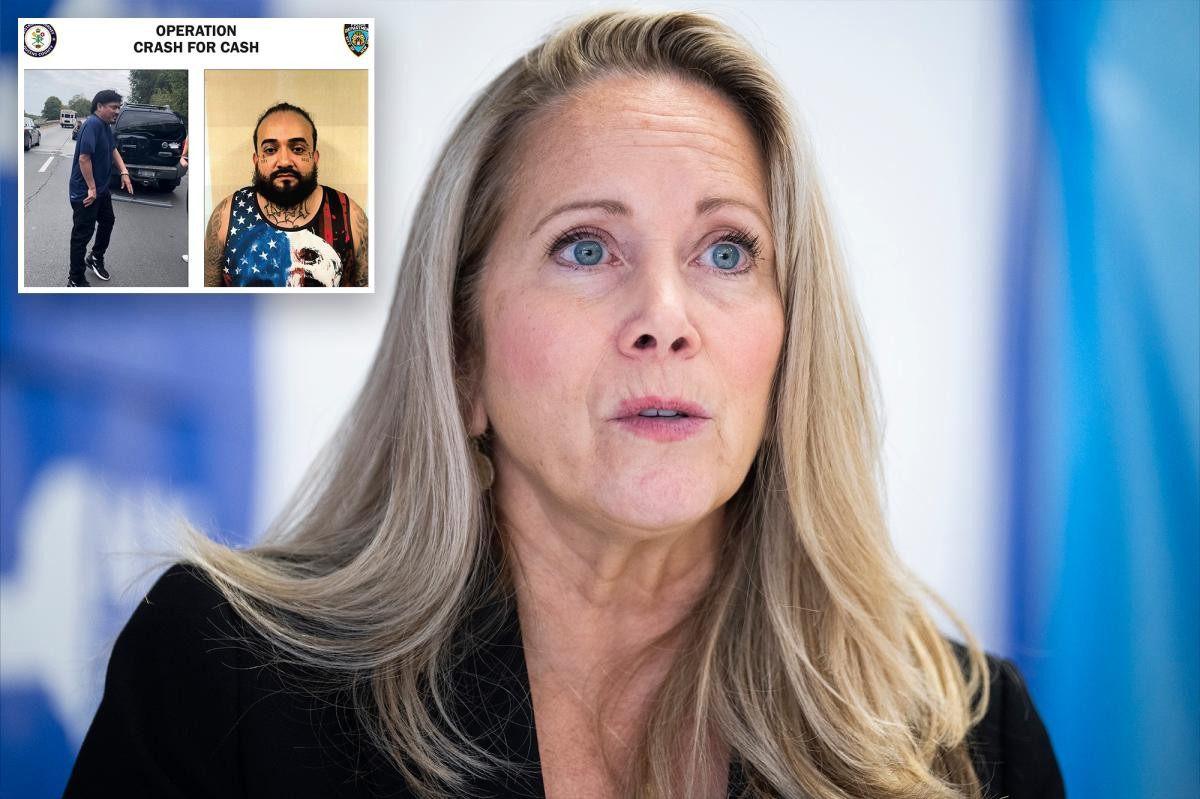
Congress is taking a hard look at a dangerous scam that has been hitting drivers in the wallet and putting lives at risk. A new bipartisan bill introduced Thursday would make the practice of staging car crashes for insurance money a federal crime, punishable by up to 10 years in prison.
Rep. Laura Gillen (D-NY) introduced the Stop Auto Fraud Act of 2026 alongside Reps. Troy Nehls (R-Texas), Josh Gottheimer (D-NJ), and Vince Fong (R-Calif.). The legislation targets so-called 'crash for cash' schemes, where fraudsters deliberately engineer collisions with unsuspecting drivers to collect insurance payouts.
Why is 'crash for cash' fraud on the rise?
According to the National Insurance Crime Bureau (NICB), reports of staged accidents jumped 35% across the US between 2024 and 2025, and 52% over the first half of this decade. The schemes have become increasingly organized and lucrative for criminal networks.
'We've seen a pretty significant increase in this form of fraud in recent years,' said Kyle McCollum, vice president of government affairs at the NICB. 'It's becoming a very lucrative and attractive form of auto insurance fraud for organized actors out there. It is a highly organized type of crime, and I think it compels a very organized response.'
How much does insurance fraud cost American drivers?
The financial toll is significant. New York drivers pay an average of $3,492 per year in car insurance premiums, more than $1,000 above the national average, according to a July Forbes report. Gillen's office cites data showing insurance fraud and staged crashes can add more than $300 annually to Empire State drivers' bills.
Gillen framed the bill as a win for both safety and affordability. 'This is a tough-on-crime, lower-cost bill that is responding to the surge we've seen in these crash for cash schemes that are being perpetrated by hucksters and fraudsters across our country, including on Long Island, that are driving up our auto insurance rates and putting drivers' lives at risk,' she said.
What penalties would the Stop Auto Fraud Act impose?
The legislation would make staging a crash a federal offense with up to 10 years behind bars. Penalties escalate significantly when people get hurt: up to 20 years for crashes causing serious bodily injury, and life in prison if a staged accident results in death.
Fines collected from convicted fraudsters would be directed into the federal Highway Trust Fund, which helps finance road and bridge projects across the country.
Gillen noted the fraud extends beyond vehicle damage. 'It's not just the actual accidents themselves and the damage to the vehicles. It's also about claims for injuries, for treatments, and in some of these fraud cases, people were getting unnecessary surgery just to make their damages go higher, and so it's cracking down on all of that,' she explained.
Who is affected by staged car crashes?
Nicholas Díaz-Baquero, a Garden City Uber driver, joined Gillen at the bill's rollout. He suffered a back injury in what he suspects was a staged crash.
'We both had our left signals on to turn, and there was no traffic in front of us,' he recounted. 'Suddenly, the vehicle ahead stopped for no apparent reason, and a driver coming from behind at a very high speed slammed into both of us. I had no chance to avoid it. It's frustrating and heartbreaking that honest drivers can be put in this position just trying to make a living.'
Recent prosecutions show the scale of the problem. Last month, Jaime Huiracocha, 53, and Victor Murillo, 34, pleaded guilty to insurance fraud after staging three accidents in August and October 2024 that netted their crew more than $80,000 in insurance payouts.
Which states have the highest rates of staged crashes?
NICB data shows Washington, DC has the highest rate of confirmed staged crashes in America at 19.79 per 100,000 residents. California follows at 13.18 per 100,000, with New York close behind at 11.61 per 100,000.
Why does this need to be a federal crime?
Currently, federal prosecutors often have to use wire fraud statutes to pursue these cases. The new bill would clarify that staging a motor vehicle accident is itself a federal crime, giving prosecutors a more direct legal tool.
'It sends that signal from the top down that we're not going to stand for this type of fraud,' McCollum said. 'I think it also provides an additional tool for federal prosecutors. Historically, they've had to prosecute this form of fraud more under the wire fraud statute. So this actually clarifies and makes abundantly clear that staging a motor vehicle accident itself is a federal crime.'
Gillen expressed confidence the bill will find support across the aisle. 'I think this is a no-brainer. There should be broad bipartisan support to crack down on this crime and to make our roads safer and lower costs.'