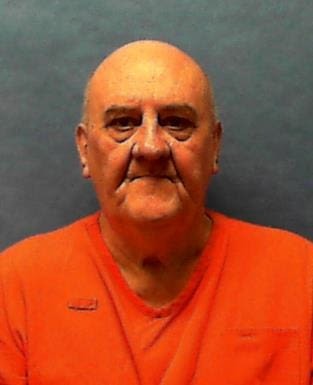
Governor Ron DeSantis has signed a death warrant for Curtis W. Beasley, a 77-year-old Haines City man convicted in 1998 of beating a Dundee woman to death with a hammer. The execution by lethal injection is scheduled for September 29 at Florida State Prison near Starke.
The case is drawing renewed attention to a troubling detail: the jury that recommended the death sentence was not unanimous. In a 10-2 vote, jurors recommended Beasley face the electric chair, the standard method at the time. Florida was one of only two states that allowed judges to override jury recommendations, a practice the U.S. Supreme Court struck down in 2016 as unconstitutional.
What happened in the 1995 killing of Carolyn Monfort?
Beasley was convicted of first-degree murder for the death of 62-year-old Carolyn Monfort, a woman he had known for 17 years. At the time, he was staying at her home and working as a painter at apartments she managed. The medical examiner found she had been struck 15 to 20 times in the head with a hammer.
Prosecutors argued Beasley's motive was to take $800 Monfort had received the day she died. There was no forced entry, and Beasley was gone when her body was discovered. He was arrested in Alabama five months later.
Why does the lack of a unanimous jury matter?
Beasley has maintained his innocence since his conviction. During a 90-minute sentencing hearing, he told Circuit Judge Cecelia Moore:
“I did not kill Carolyn Monfort. I did not steal her car and I did not steal her money.”
His defense attorneys, Robert Norgard and Byron Hileman, pointed to the absence of eyewitnesses, fingerprints, or a confession. They also presented mental health experts who testified that Beasley's history of drug abuse may have caused brain damage affecting his memory and impulse control.
The non-unanimous jury recommendation raises questions about the reliability of the death sentence. Research has shown that split verdicts are more likely to be wrong, and that requiring unanimity serves as a safeguard against wrongful executions.
How does this case fit into Florida's broader execution record?
Beasley's execution would be the second involving a Polk County death penalty case in just over a year. In September 2025, Florida executed David Pittman for the 1990 murders of three family members in Mulberry. In July, the state executed James Duckett for the 1987 kidnapping, rape, and murder of 11-year-old Teresa Mae McAbee.
So far this year, Florida has executed 13 people by lethal injection. That pace places the state at the forefront of capital punishment in the United States, even as public support for the death penalty has declined nationally.
What are the arguments for and against the death penalty?
Supporters of capital punishment argue it delivers justice for victims and their families, and serves as a deterrent to violent crime. They point to cases like Beasley's, where the evidence of a brutal killing is well documented.
Opponents argue the death penalty is irreversible, disproportionately applied to people of color and those who cannot afford quality legal representation, and risks executing innocent people. The case of Paul Beasley Johnson, who died on death row in 2023 after four decades, illustrates how long these cases can drag on, costing taxpayers millions while families wait for closure.
What happens next for Curtis Beasley?
Beasley's legal team is expected to file appeals in the coming weeks. His attorneys may argue that the non-unanimous jury recommendation, combined with his age and health, should warrant clemency. Florida Governor DeSantis has the power to commute the sentence, though he has shown little inclination to do so in recent cases.
The execution is scheduled for September 29, barring court intervention. As the date approaches, expect renewed debate about whether Florida's capital punishment system can truly deliver justice, or whether it perpetuates the very inequalities the justice system is meant to address.