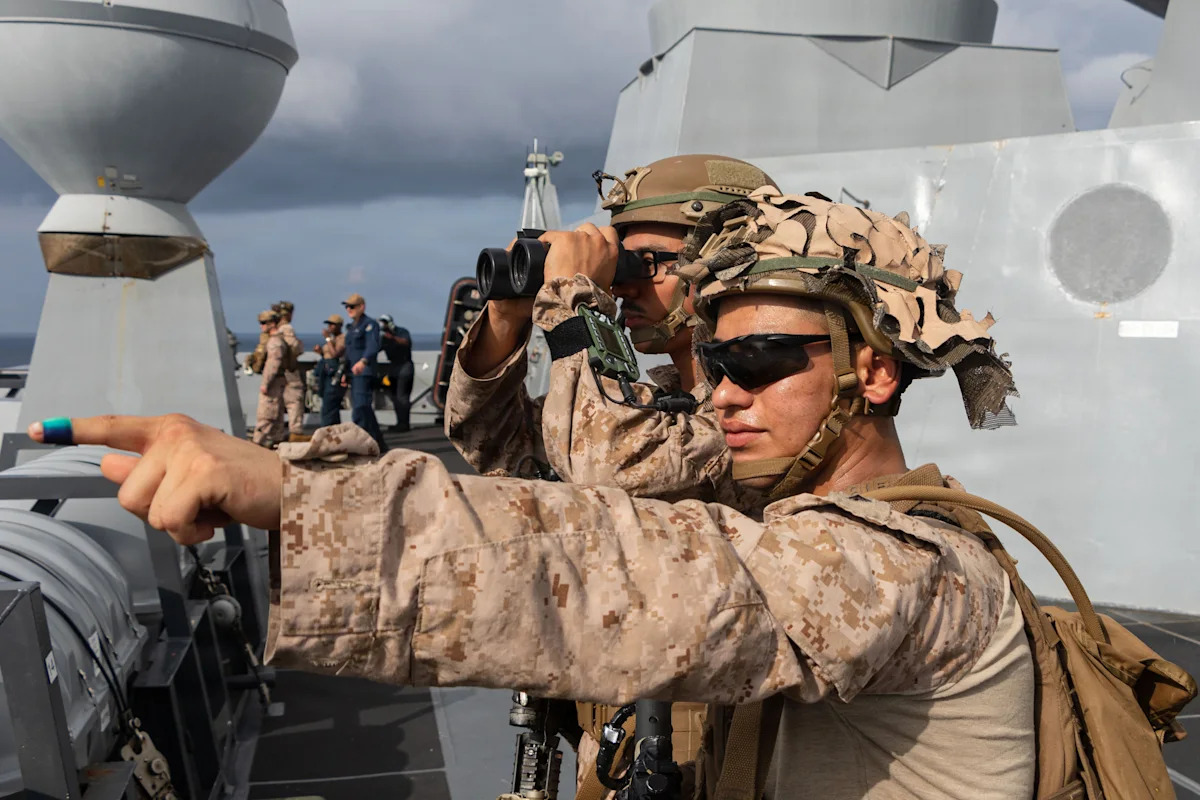
The Marine Corps is looking for new ways to navigate the world's most dangerous waterways, and they are turning to artificial intelligence and autonomous drones to do it. A recent Request for Information from Naval Air Systems Command reveals a military branch grappling with how to project power in contested seas without putting human pilots at risk.
A Shift Toward Autonomous Warfare
At the heart of this push is the Future Attack/Strike, or FASt, initiative. As the Corps retires aging aircraft like the AV-8B, AH-1Z and F/A-18, it wants to replace them with next-generation tech. We are talking about long-range missiles, MQ-58 Valkyrie combat drones, and electronic warfare systems. The goal is to use these tools to blast a path for amphibious groups through critical chokepoints.
This move raises urgent questions about the future of warfare. As the military increasingly relies on autonomous and semi-autonomous weapons, the ethical implications are hard to ignore. The RFI specifically mentions the need to model operations where manned aviation is