
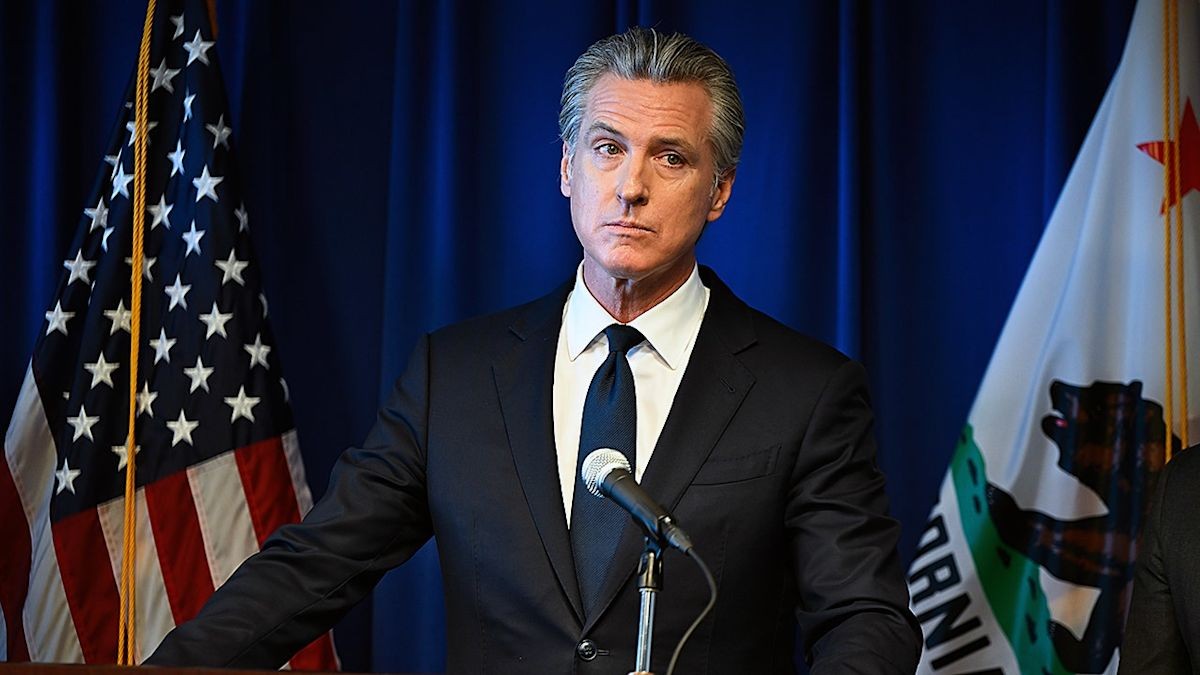
California Governor Gavin Newsom has pledged to launch another lawsuit against the Trump administration after the Supreme Court cleared the way for controversial mail-in voting restrictions to take effect in 23 states ahead of November's midterm elections.
The high court's 6-3 ruling on Monday lifted an injunction that had blocked key provisions of President Donald Trump's executive order on election integrity. The justices emphasized that their decision addressed only the injunction, not the order's ultimate legality, leaving room for future challenges.
What did the Supreme Court decide about mail-in voting?
The Court concluded that the provision directing the Department of Homeland Security to create and distribute citizenship lists imposed obligations on federal agencies rather than on states themselves. In its opinion, the Court wrote that this provision is an internal directive from the President to a subordinate, and since it imposes no obligations on the states, they suffer no concrete harm and therefore lack standing to challenge it.
Justices Sonia Sotomayor, Elena Kagan, and Ketanji Brown Jackson dissented from the majority's ruling.
Why is Newsom suing again?
Newsom framed the ruling as a direct threat to voting access. In a sharply worded statement, he said the Supreme Court had allowed the administration to move ahead with a plan to disenfranchise voters across the country.
California will be suing AGAIN to block these Orwellian rules from being implemented, the governor declared.
The governor's office also spotlighted two election-related bills moving through the California Legislature that would strengthen protections for the state's electoral process. AB 282 would create new felonies involving the seizure of ballots, election records, or certified voting technology before results are certified. SB 259 would establish criminal penalties for interfering with the delivery or return of mail-in ballots, including a felony carrying up to four years in prison in certain cases.
Newsom's office described the measures as an Election Protection package, building on legislation he signed earlier this summer.
What does Trump's executive order require?
The executive order directs federal agencies to compile citizenship-based lists of eligible voters and instructs the U.S. Postal Service to deliver mail-in ballots only to people appearing on those approved lists. Both the USPS and the Department of Justice have indicated they will move to implement the revised restrictions following Monday's ruling.
What happens next in the legal fight?
While the Supreme Court's decision allows enforcement to proceed for now, the underlying legal questions remain unresolved. Newsom's promised lawsuit will likely focus on the order's broader implications for voter access and state authority over election administration.
This legal battle underscores a growing divide between federal and state approaches to election integrity, with California positioning itself as a bulwark against what it views as federal overreach into voting rights.
Frequently asked questions
Will mail-in voting rules change immediately?
The Supreme Court's ruling allows the Trump administration to enforce the challenged provisions while litigation continues, but the ultimate legality of the order has not been decided. States affected by the injunction may see changes in how mail-in ballots are processed, though legal challenges are ongoing.
Can California block the order on its own?
California cannot unilaterally block a federal executive order, but it can challenge it in court. Newsom has announced plans to file a new lawsuit, and the state is also advancing its own election protection legislation to counter potential federal interference.
What are the arguments against the executive order?
Opponents argue the order could disenfranchise eligible voters by creating barriers to mail-in voting, particularly for communities of color and young voters. They also contend it oversteps federal authority by interfering with state-run election processes.