
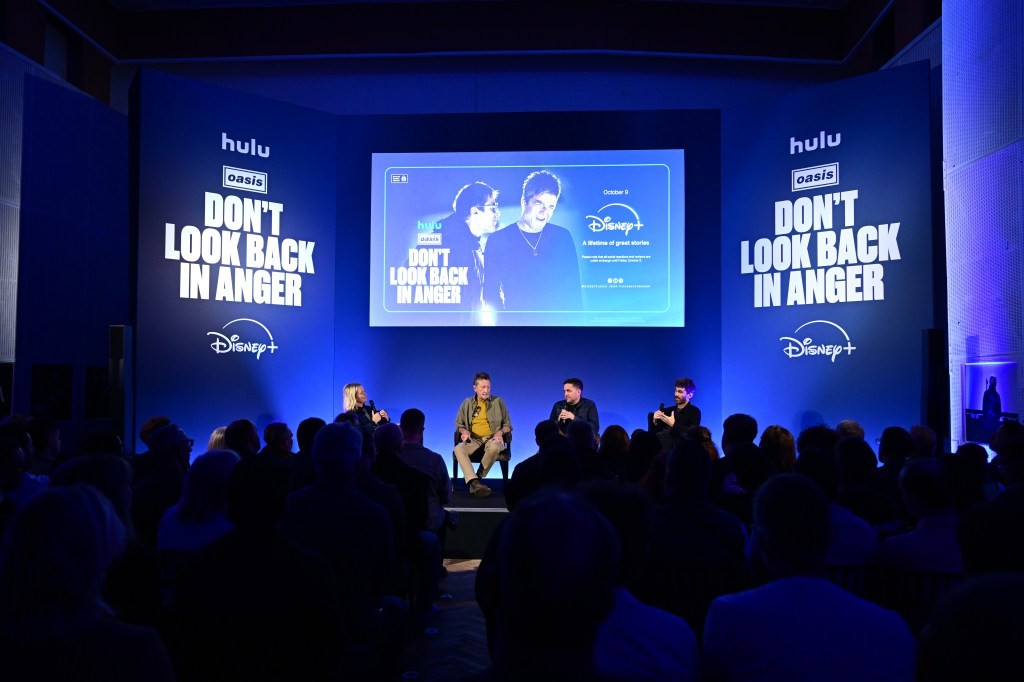
Oasis: Don't Look Back in Anger has become the biggest documentary hit of the year in the UK and Ireland, grossing over £4 million in less than a month. But the film's directors say the real subject isn't the Gallagher brothers. It's the millions of fans who waited 16 years to see them again.
The documentary, which premiered on Disney+ this week, follows the band's 2025 reunion tour. It opened at number one with £2.66 million in its first weekend, a record for a music documentary. The film's success speaks to something larger than nostalgia: it's about what happens when a generation that never got to see Oasis live finally gets their chance.
Why did the Oasis reunion mean so much to fans?
Directors Dylan Southern and Will Lovelace made a deliberate choice. Instead of focusing on Noel and Liam Gallagher on stage, they turned their cameras toward the crowd. The result is a film that captures something rare: collective joy, shared memory, and the emotional power of music.
Writer Steven Knight, who also worked on the film's structure, explained the mission.
“The whole point of doing the thing was to explore why this music, these words, and the poetry of these words have this effect on so many different people around the world,” he said. “You see that unfailingly happen every single time. Somehow those songs have that effect on people.”
The film includes footage from Cardiff to South Korea, showing fans of all ages singing along to songs that were never marketed or advertised for 16 years. Knight noted that Noel Gallagher himself was surprised by the response.
“They were completely overwhelmed by the demand for tickets,” Knight said. “It became quite obvious that it wasn't just the original fans, it was a whole new generation, probably two generations of people who wanted them.”
What does the film say about class, community, and belonging?
For Civic Pulse readers, the film's deeper themes will feel familiar. This is a working-class underdog story, rooted in ideas of loyalty and collective identity. Southern said the experience of making the film reminded him of core human values.
“Being kind is a good thing. Forgiveness is a good thing. Remembering how short life is is a good thing,” he said. “I cried during the edit of this film, I cried during the filming of this film, and I cried watching it with an audience.”
The directors intentionally placed cameras in the crowd to capture the emotional impact of the music. Lovelace said the team wanted to find people who might have been seeing the band for the first time.
“We threw them into the crowd. We wanted them to be as close to the fans as you could get,” he said.
What does this mean for Bond 26?
Knight is also the writer of the next James Bond film, the first without Daniel Craig and without input from the Broccoli family. His work on the Oasis documentary offers clues about his approach. Like Peaky Blinders, the film is a story about loyalty, duty, and working-class identity. Knight's Bond may be more blue-collar than previous versions, a man of his word shaped by a sense of obligation rather than privilege.
The documentary's international scope, which spans more countries than the average Bond movie, also hints at Knight's worldview. He said the film carries a message
“at a time of division and all the bollocks that's going on”: that people everywhere respond to the same emotions, regardless of background.
“In every different place in the world with loads of different sorts of people and different backgrounds, the reaction and the effect of the songs is the same,” he said.
How that inclusive vision will square with the colonial and Cold War elements of Ian Fleming's original novels remains to be seen. But if the Oasis film is any indication, Knight is interested in telling stories about people, not just spectacle.
Where can you watch the Oasis documentary?
Oasis: Don't Look Back in Anger streams exclusively on Disney+ starting Friday, October 9, with previously unseen footage and extended performances.