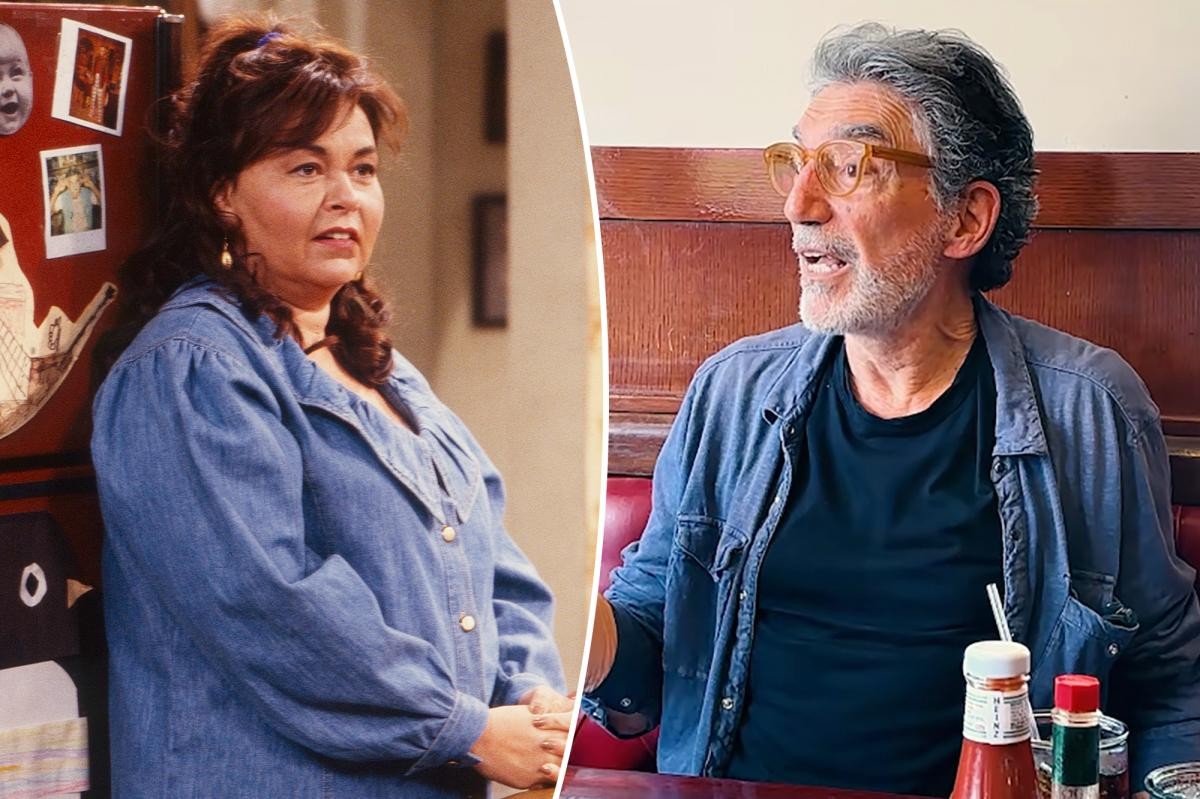
Legendary TV producer Chuck Lorre is opening up about the toxic dynamics behind the scenes of the original Roseanne sitcom, claiming the star's deep-seated animosity toward her writing staff made her nearly impossible to work with. The revelations, shared on the Dinner's On Me with Jesse Tyler Ferguson podcast, offer a rare glimpse into the power struggles that can define a hit show.
Lorre, who wrote and produced on Roseanne for two seasons, said Barr fundamentally resented the very concept of a writers' room. He described a 'built-in animosity' between the comedian and anyone tasked with putting words in her mouth. For a performer who built her career on her own voice, the collaborative nature of television was, in his words, a 'fundamentally flawed' premise.
'She made herself a superstar based on her words, her writing,' Lorre explained. 'Then transition to a television show where [you] can't do it alone. It's impossible. That transition was not going to happen.'
Lorre, now 73, admitted he endured the grueling 60 to 70-hour weeks because he was at a breaking point in his own career. 'I navigated because I'd had, I don't know, 15, 20 years of poverty and health issues and all sorts of stuff, and I was not going to go back,' he said. 'Under no circumstances was I going to go back to scrambling to pay the rent.'
Why did the Roseanne reboot get canceled?
The show's history is a case study in how personal conduct can collide with professional consequences. The 2018 reboot was canceled after just two months when Barr posted a racist tweet about Valerie Jarrett, a former adviser to President Barack Obama. The network quickly pivoted to The Conners, a spin-off that ran successfully for seven seasons without her.
What is Chuck Lorre's history with Roseanne Barr?
The friction between Lorre and Barr is not new. In 2011, Barr claimed she fired Lorre for being a 'big drunk' on set and mocked his writing, saying his 'lines could choke a f---ing horse.' A year later, Lorre told the Archive of American Television that the show's environment was 'very volatile' and that Barr 'just hated' one of his scripts.
How does this reflect on power dynamics in the entertainment industry?
This isn't just a celebrity feud. It highlights a systemic issue in Hollywood: the tension between star power and the collective creative process. When a single personality dominates, it can stifle collaboration and create a hostile work environment. The recent clash between Barr and her former TV son, Michael Fishman, who condemned her racist tweets, shows how these dynamics continue to reverberate.
Barr has yet to respond to Page Six's request for comment on Lorre's latest claims. As the industry continues to grapple with questions of accountability and workplace culture, this story serves as a reminder that the stories we love often come with complicated, and sometimes troubling, behind-the-scenes realities.