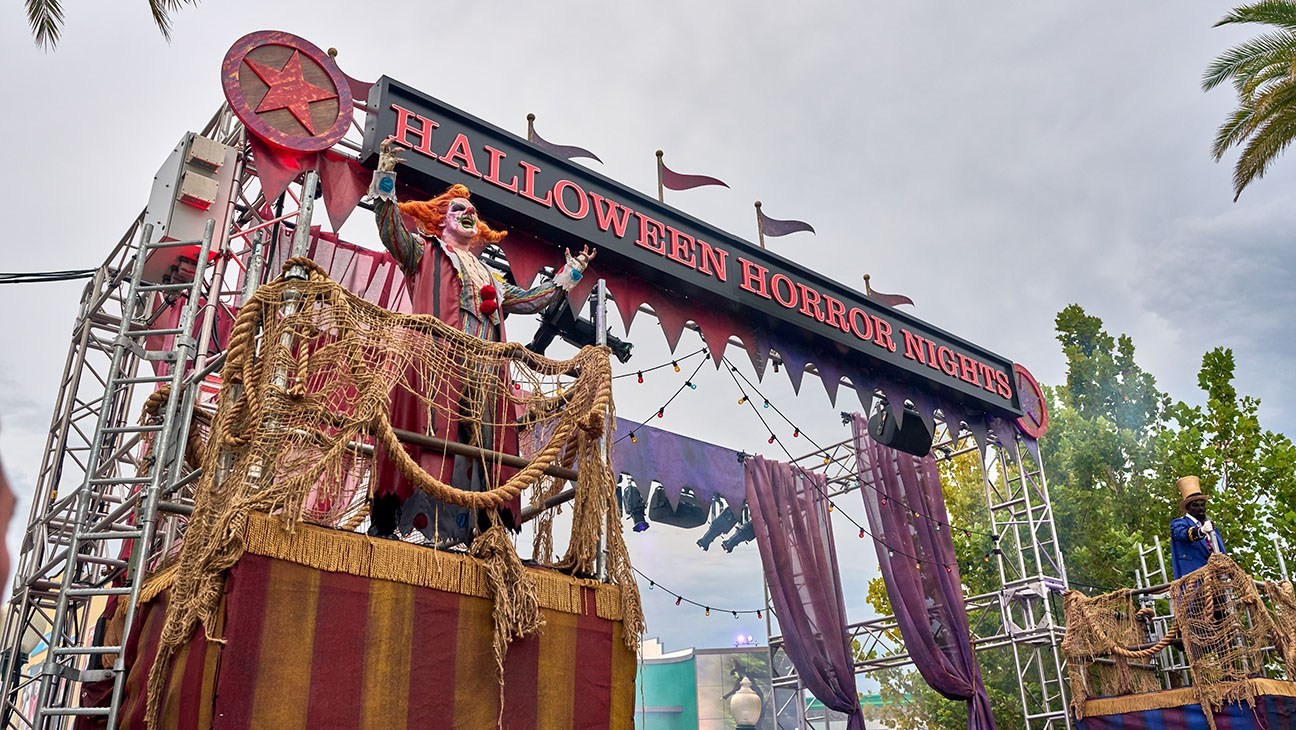
Universal Orlando's Halloween Horror Nights marked its 35th year in 2026 by doubling down on horror's literary roots, from a fully R-rated Hellraiser maze built with Clive Barker's blessing to a live show that is pulling a new generation of readers through the turnstiles. According to The Hollywood Reporter, which interviewed the event's creative team, the after-hours spectacle is quietly converging with BookTok, the social media community where young readers have turned dark romance and horror fiction into a commercial force.
That convergence matters beyond the theme park gates. Horror is having a commercial and critical surge in the United States, with sales up 39% over the previous year, even as the share of American adults reading for pleasure continues to fall. If a haunted attraction can send visitors back to a novella, that is culture doing what culture does.
Inside the Hellraiser house: an invitation, not a prop
The centerpiece of this year's event is a maze based on Barker's 1986 novella The Hellbound Heart and the film franchise it spawned. Guests pass a towering recreation of the Lament Configuration, the puzzle box that opens a doorway to hell, and spend five to seven minutes inside a labyrinth of spinning pillars of flesh, floating chains, and 10 versions of Pinhead, several voiced by the character's original actor, Doug Bradley.
“When you talk to Clive, he says the puzzle box itself has to matter. It's an invitation. It's a threshold. It's not a prop,” said Mike Aiello, Senior Director of Entertainment Creative Development at Universal Orlando Resort. “The puzzle box gives the guest the choice to open it, to go through the queue line and enter the box, just like the main characters in the film.”
Barker, according to the creative team, was directly involved and insisted the house keep the sensual, transgressive layer of his source material intact. Lora Sauls, Assistant Director of Entertainment, said Barker was “very adamant” that the house feature both the horror and the eroticism of the films. The result is a milestone: the clearest embrace yet of the full adult potential of book-to-screen adaptation at an event that began, as the Orlando Sentinel recalled in its 150th anniversary flashbacks, with a far more modest Halloween celebration in 1991.
Three decades of literary houses
The Hellraiser house sits at the end of a long arc. Universal's Classic Monsters, most of them born from novels, appeared in the very first 1991 house, Dungeon of Terror, which featured The Invisible Man and Phantom of the Opera. Since then, Dr. Jekyll and Mr. Hyde, Count Dracula, Frankenstein's Monster, and The Mummy have cycled through houses, scare zones, and shows nearly every year, as the Wikipedia overview of the event documents across its international editions.
Adaptation has not always been simple. The 2016 Exorcist house had to translate William Peter Blatty's single-location novel into a walkable experience. The Shining house leaned on Stanley Kubrick's cinematic vision rather than Stephen King's, precisely because the author and director famously disagreed. Aiello frames those constraints as creative fuel: “You never know where you're going next.”
The team's most author-driven effort remains 2011's Nevermore: The Madness of Poe, the only author-centric house in the event's history. Poe's work, in the public domain by then, offered fears that Aiello described as deeply personal: guilt, grief, obsession, and the collapse of trust in one's own mind. “In The Tell-Tale Heart, guilt becomes something you can hear and almost physically feel,” he told The Hollywood Reporter.
Why BookTok is showing up
The event's original live show, Nightmare Fuel, may be the clearest sign of where the audience is heading. This year's theme, Blood Noir, follows an angel's descent into darkness, her transformation into a vampire, and her empowerment alongside a supernatural lover. Fire performers, aerialists, and a sword eater carry the story, and the romance at its core has made the show a genuine talking point among BookTok creators.
Charles Gray, the show's Senior Show Director, defended the love story against skepticism from horror traditionalists. “I know that romance can be a powerful thing, and not just for girls. For guys, too,” he said. He argued the pendulum swing between joy and terror is what makes the scares land: “You need that breath before the bite.”
Reader Janelle Anderson, a Stephen King fan who posted a video summoning fellow book lovers to the show, told The Hollywood Reporter the crossover is exactly what publishing is producing right now. She named Lights Out, Butcher and Blackbird, A Court of Thorns and Roses, and Fourth Wing as book series she would love to see turned into scare zones. Readers, she said, want to feel part of the story: they dress up, take pictures, and buy themed food. Horror bookstore owners report the same shift, with the “horrormance” subgenre drawing readers looking for, as Thrillerdelphia co-owner Anthony Long put it, “safety in fear and fear in safety.”
Themed food as world-building
Even the menus carry the literary DNA. This year's Hellraiser offerings included the Cenobite's Kiss, a tequila cocktail with liquid heat bitters, and the Pleasure & Pain Brain, a custard dessert dressed in strawberry sauce to look like, well, a brain. Executive Sous Chef Christopher Colón described the approach as seductive but dangerous on the first sip, and said the same novel-first storytelling process shaped the vampire restaurant at Epic Universe's Dark Universe, a more sophisticated year-round descendant of the Horror Nights playbook.
What comes next
There is no published blueprint for how Universal will keep leaning into the literary, but Aiello made one thing clear: after 35 years, books “will always be part of the conversation.” He floated Castle Rock and The Dark Tower as a fandom the team is ready for, and left the next nightmare unnamed. “We like to keep you in the dark just a little longer,” he said.
For a cultural moment in which horror is dominating the U.S. box office while romance tops book sales charts, the merge is less a gimmick than a mirror. The readers are already at the gate. The queue line, as the Cenobites would have it, is an invitation.
FAQ
What book is the Hellraiser house based on?
Clive Barker's 1986 novella The Hellbound Heart, which he adapted into the 1987 film Hellraiser.
How long has Halloween Horror Nights run in Orlando?
The event began in 1991 and marked its 35th anniversary in 2026.
Are there more author-based houses planned?
None announced, but Universal's creative team says it is open to author-centric houses and cites Stephen King's Castle Rock as a fandom it is ready for.