
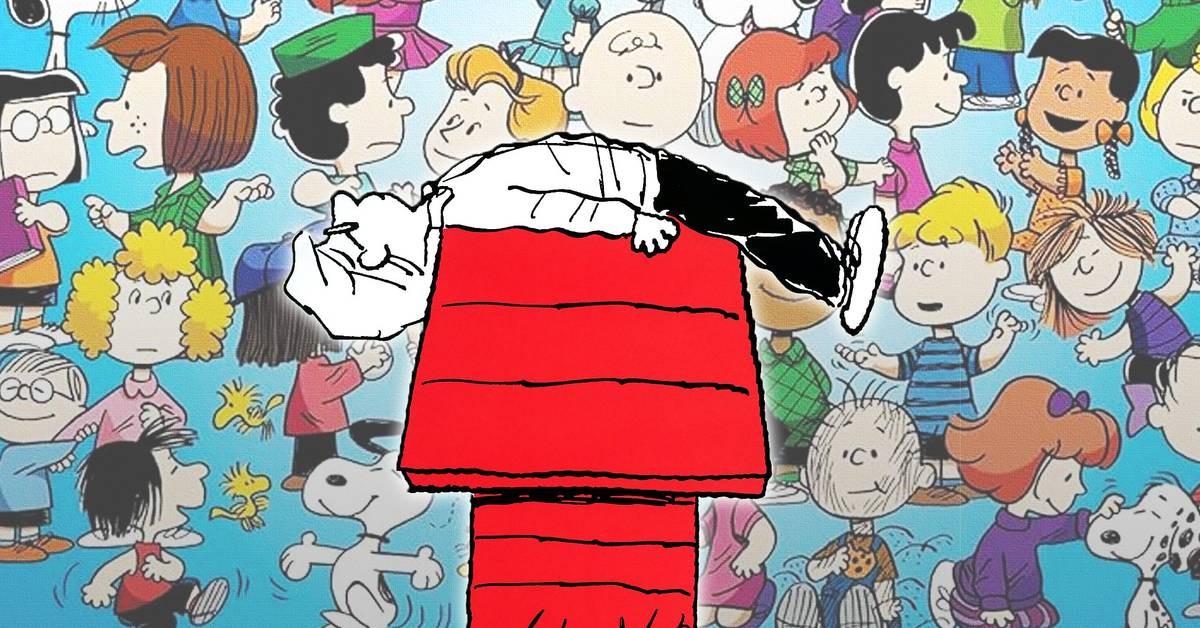
Charles M. Schulz spent fifty years turning his own disappointments, family life, and moral convictions into Peanuts, and a new retrospective from CBR published on October 20, 2026 lays out the real people and events behind Charlie Brown, Lucy, Franklin, and the rest of the gang.
The result is a portrait of a cartoonist who mined his private wounds for material, and who, at one decisive moment in 1968, risked his career to put a Black child in America's most popular comic strip.
Charlie Brown Was Largely Schulz Himself
Fans long suspected that the round-headed kid who never kicks the football was a stand-in for his creator. In a 1997 interview on Charlie Rose, Schulz confirmed it, describing Charlie Brown as 60 percent himself and 40 percent other people or imagination. Schulz said he had felt withdrawn as a child, and he channeled that feeling into a character famous for self-doubt.
"I suppose there's a melancholy feeling in a lot of cartoonists, because cartooning, like all other humor, comes from bad things happening."
That quote, cited by CBR, captures the engine behind the whole strip. Schulz did not invent Charlie Brown's failures out of thin air; he translated lived experience into four panels a day, which is part of why readers across generations recognized themselves in him.
Franklin, Harriet Glickman, and a Threat to the Syndicate
The most politically consequential origin story in Peanuts belongs to Franklin, the first Black character in the strip. Eleven days after the assassination of Martin Luther King Jr. in 1968, a Los Angeles schoolteacher named Harriet Glickman wrote to Schulz arguing that a Black child belonged in Peanuts at a time when Black communities had almost no representation in comics.
Schulz did not dismiss the letter. According to CBR, the two began a correspondence and friendship that lasted years, and Schulz was persuaded. When his syndicate objected, Schulz reportedly threatened to stop writing Peanuts altogether if Franklin was removed. The character stayed.
It is worth pausing on what that meant in 1968. Syndicated comics ran in thousands of newspapers across a segregated country, and some Southern papers reportedly refused to run strips showing Franklin sitting in the same classroom as white children. Schulz, a Midwestern moderate not known for public activism, chose integration anyway, and used the only leverage he had: the strip itself. For a publication like this one, devoted to the idea that ordinary citizens can move powerful institutions, Glickman's letter and Schulz's response remain one of the cleaner examples of participatory democracy working as advertised.
Lucy, Linus, and the Family Behind the Strip
Less weighty, but no less revealing, are the domestic origins of the van Pelt siblings. Lucy began, per CBR, as a rambunctious toddler modeled on Schulz's adopted daughter Meredith, then evolved into a caricature partly drawn from his next-door neighbor, Louanne van Pelt, and later from interactions with his first wife. Schulz himself called Lucy his least favorite character, though her bluntness powered some of the strip's funniest moments.
Linus came from warmer material. Schulz said the blanket-carrying philosopher was inspired by his grandchildren, whom he reportedly wished could stay children forever. He also admitted Linus carried his own personality, describing him as his serious side, the house intellectual whose brightness contributed to his insecurity.
A Rejected Proposal and the Little Red-Haired Girl
The Little Red-Haired Girl never appears in the strip, yet she may be its most autobiographical figure. Schulz dated Donna Mae Wold for three years before Peanuts was syndicated; in 1950, the same year the strip debuted, she ended the relationship.
"I can think of no more emotionally damaging loss than to be turned down by someone whom you love very much. A person who not only turns you down, but will almost immediately marry the victor. What a bitter blow that is."
People who knew Schulz personally, according to CBR, said he never fully got over it. Charlie Brown's eternal, unrequited yearning for the Little Red-Haired Girl was Schulz processing that loss in public for half a century.
Even the Minor Characters Came From Real Life
Snoopy's design traces back to Spike, the mixed-breed dog Schulz's family adopted in 1927; Snoopy's brother later got the name. Schroeder was named after a boy Schulz caddied with at a golf course in St. Paul, Minnesota, and his toy piano was inspired by Schulz's own daughter's. Schroeder's frosty dynamic with Lucy, meanwhile, reportedly echoed Schulz's relationship with his first wife.
Tennis bully Molly Volley rounded out the cast. Schulz described her as a caricature of people he played tennis with, "one tough cookie who embodies the widely held American belief that the only thing that matters is winning." It is one of the few moments where Schulz openly criticized the win-at-all-costs culture the strip otherwise gently satirized.
For broader context on the strip and its characters,