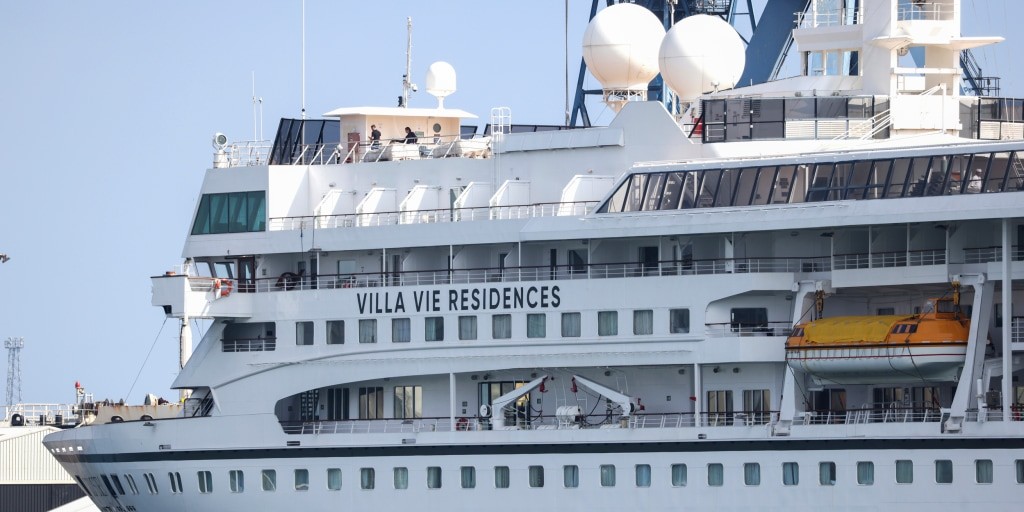
The residential cruise ship Villa Vie Odyssey halted operations in Cambodia on Tuesday, October 27, 2026, after Florida-based Villa Vie Residences said soaring fuel costs made continuing impossible. Residents were told to pack up and disembark, in some cases within hours, with no clear plan for where they would go next.
According to NBC News, the company ordered everyone off the 642-foot vessel and said in a statement that it was working to identify “temporary living arrangements” for the people aboard. The Odyssey launched from Belfast three years ago, promising passengers “an unparalleled lifestyle of luxury and exploration” as it circled the planet. Cabins were sold or rented outright, marketed as homes at sea.
How the collapse unfolded
Residents learned their journey was over in a startlingly abrupt way. Randy Cassingham, a resident who runs ResidentialCruising.com, wrote in a blog post that a company official pinned a note to the ship's message board shortly after 7 a.m. local time on Monday. The Odyssey was entering a “temporary lay up,” the note said, and everyone had to be off the ship by 2 p.m. that day.
Cassingham described the collapse as the result of a “cascade of problems” that he said he would detail later. He did not immediately respond to an interview request.
The company's statement said it had taken significant steps to cut fuel consumption, but those measures failed to offset the spike in costs. Business Insider reported that fuel costs had risen more than 300 percent. “Passing the full increase on to residents is not a realistic solution,” the company said. “Our focus now is on supporting residents, crew, and employees while we work toward restructuring and recapitalization over the next 60 days. That work is ongoing, and no outcome is assured.”
Warning signs residents say were visible for months
For some who had already left the ship, the news came as no surprise. Pamela Reckamp, 59, who rented a cabin with her husband and disembarked earlier this month, said she attended a meeting in early September where a company official asked cabin owners to help raise $1 million so the ship could leave Ha Long Bay, Vietnam.
“She said, 'If we don't get this money, we have about four days of the ship running,'” Reckamp told NBC News. “'Then the lights will go off and the AC will go off.'”
At a meeting a few weeks later, Reckamp recalled, a woman stood up and said she had bought a cabin in August without being told about the financial trouble.
“I sold my house. I sold my car. I bought my home on this ship,” the woman said, according to Reckamp.
Reckamp said she felt terrible for the residents and crew, whom she described as lovely. “We dodged a bullet,” she added.
A business model built on selling permanence
The Odyssey's collapse is more than a travel industry stumble. It is a case study in what happens when a company sells people a home, not a vacation, and then treats that home like a discretionary product when the balance sheet turns.
The company's own figures tell part of the story. Mikael Petterson, a Villa Vie executive, said in a release earlier this year that The Odyssey was 85 percent sold. The ship can accommodate 650 residents, though it is not clear how many people were on board Tuesday or where in Cambodia they disembarked. Petterson declined to provide additional details in an email to NBC News. TMZ reported that the residents were ordered off in Cambodia, with the company blaming skyrocketing fuel prices.
Among those left scrambling is a Hawaii couple who sold everything to live aboard for what they planned as 15 years. Supercar Blondie reported that they documented their departure in a video, writing: “After two years, nearly 60 countries, and more than 200 ports, we're packing up our cabin and stepping off the ship in Cambodia, facing a future that suddenly looks very different.”
Who protects consumers when their home is a corporation's asset?
The residents of The Odyssey occupy a legal gray zone that should worry anyone who cares about consumer protection. Buy a house on land and you hold a deed, backed by property law, insurance requirements, and disclosure rules. Buy a cabin on a corporate-owned ship and your “home” sits inside a business that can suspend operations with a note on a message board and five hours' notice.
There is no indication that Villa Vie executives broke any law. But the episode exposes how thin the safeguards are around a growing market for unconventional living arrangements, from residential cruise ships to subscription-based co-living. When the pitch is permanence and the fine print is corporate discretion, the risk lands entirely on people who often liquidated their terrestrial lives to sign up.
Futurism noted that the company halted operations because of what it called “extraordinary increases in fuel costs,” and that the ship had been marketed as offering an essentially endless voyage. The gap between that marketing and Monday morning's message board note is the story here.
Villa Vie Residences did not immediately respond to a request for comment Tuesday night. The company says it will spend the next 60 days on restructuring and recapitalization, while its former residents, scattered somewhere in Cambodia, figure out where they will sleep this week.
FAQ
Why did the Villa Vie Odyssey stop operating?
Villa Vie Residences said extraordinary increases in fuel costs, which rose more than 300 percent by one estimate, made continued operations impossible, and that passing the costs to residents was “not a realistic solution.”
Where and when did residents have to leave the ship?
Residents were ordered to disembark in Cambodia. According to resident Randy Cassingham, a company notice posted on Monday morning, October 26, 2026, gave everyone until 2 p.m. that day to leave the ship.
How many people lived on the Villa Vie Odyssey?
The ship can accommodate 650 residents, and a company executive said earlier this year that it was 85 percent sold. The exact number of people on board when operations halted has not been disclosed.