
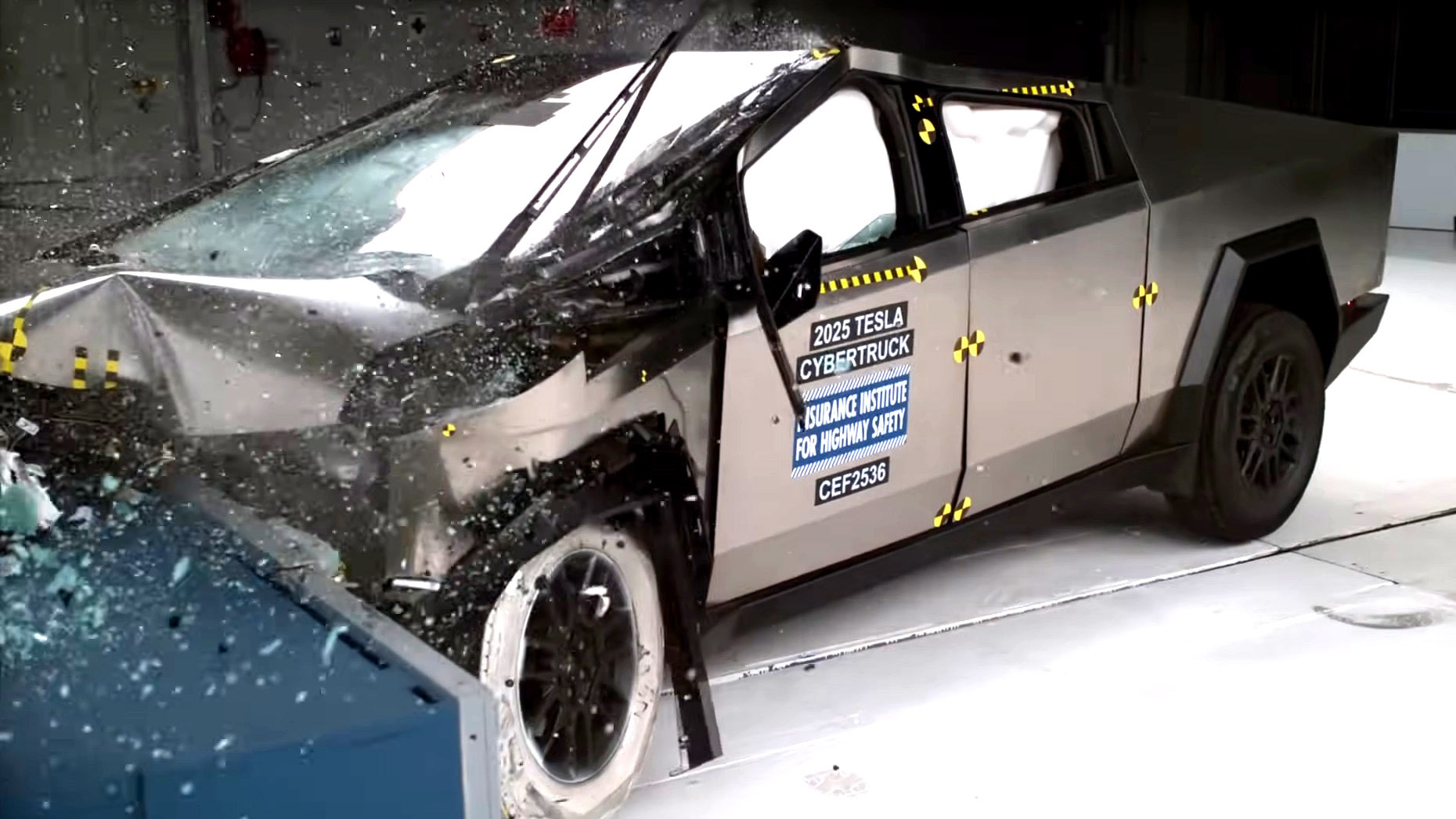
The Tesla Cybertruck just earned the Insurance Institute for Highway Safety's highest honor, the Top Safety Pick+ award. It's a legitimate achievement that puts the polarizing electric pickup in elite company. But this victory reveals a troubling truth about how America approaches road safety compared to the rest of the world.
While Tesla celebrates its success, the Cybertruck remains essentially banned from European roads. This isn't regulatory protectionism or bureaucratic nitpicking. It's a fundamental difference in values about whose safety matters most.
America's Occupant-First Approach
The IIHS award reflects the Cybertruck's impressive ability to protect its occupants. Post-April 2024 models feature structural improvements including a redesigned underbody and footwell area. These changes helped it earn "Good" ratings across crash tests, from small overlap front impacts to side collisions updated to reflect today's heavier, higher-riding vehicles.
Tesla's engineers clearly solved the energy absorption challenges that critics once claimed would doom the angular, stainless-steel truck. The company even took a victory lap on social media, proving wrong those who said it could never pass safety testing.
But here's what's missing from this celebration: any meaningful consideration of people outside the vehicle.
Europe's Broader Vision
European safety standards tell a different story about priorities. While American testing focuses almost exclusively on occupant protection, European regulations under UNECE rules and Euro NCAP place significant emphasis on pedestrian and cyclist safety.
This isn't just regulatory preference. It reflects a society that recognizes cars share roads with vulnerable users who deserve protection too. European standards require deformable front ends and energy-absorbing surfaces designed to reduce injury when vehicles strike people.
The Cybertruck's sharp stainless-steel panels, rigid geometry, and angular edges are fundamentally incompatible with these requirements. As André Thierig, Tesla's own Grünheide plant manager, told German outlet Handelsblatt, he doesn't see the Cybertruck "driving on European roads in significant numbers."
A Tale of Two Safety Philosophies
This divergence reveals competing visions of road safety. American standards excel at protecting occupants of large vehicles, which makes sense given our SUV and truck-heavy roads. But we largely ignore the safety of everyone else sharing those roads.
European standards aren't perfect, but they recognize a basic truth: true road safety means protecting all road users, not just those wealthy enough to afford the biggest, heaviest vehicles.
The Cybertruck's IIHS award is genuine progress for occupant safety. But it also highlights America's troubling blind spot. In a country where pedestrian deaths have surged 75% since 2010, shouldn't our safety standards reflect the reality that roads serve everyone?
Tesla has proven it can engineer solutions to complex safety challenges. The question is whether American regulators will demand they solve the right ones.