
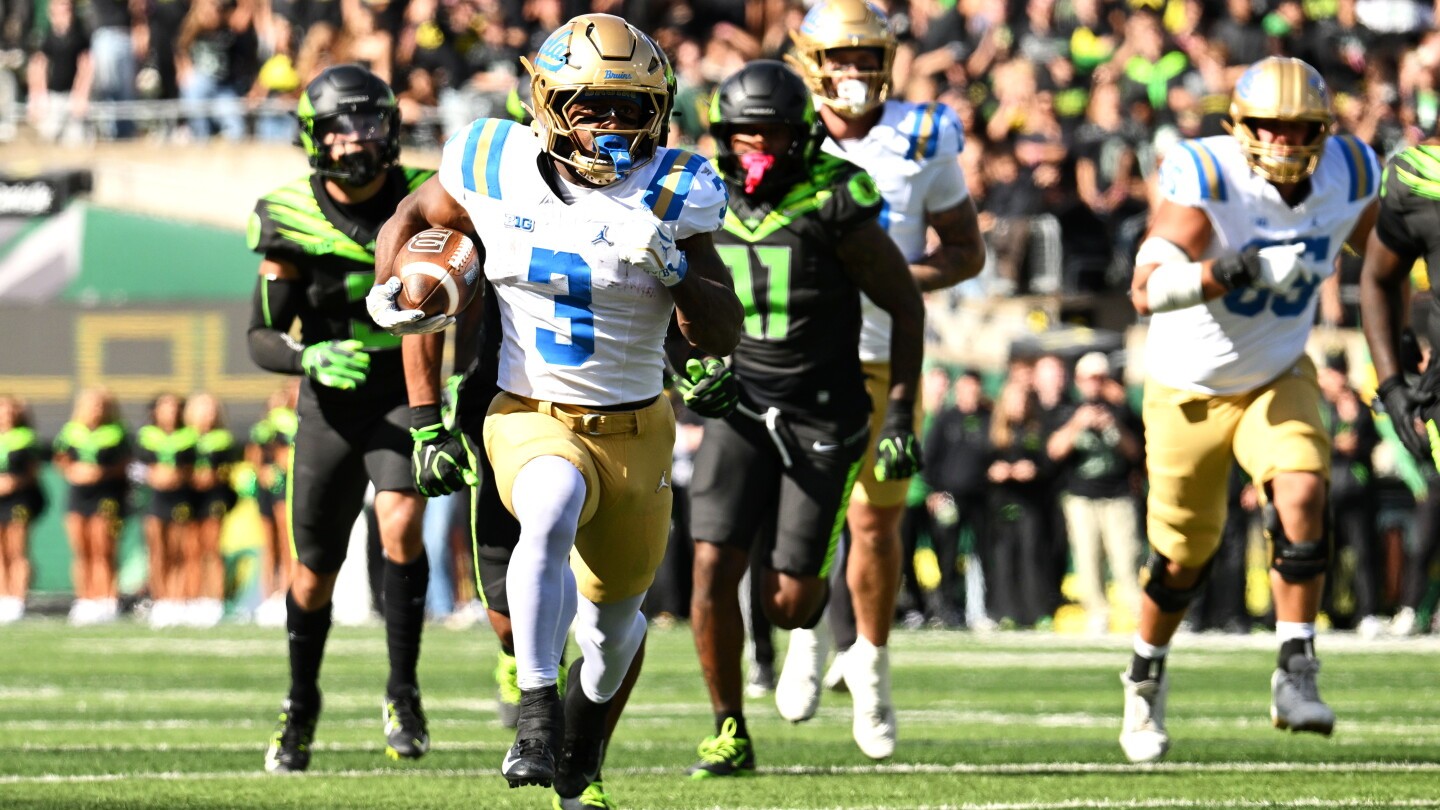
In a game that was equal parts thrilling and chaotic, No. 21 UCLA emerged victorious with a 17-15 win over No. 13 Oregon on Saturday, extending their perfect season to 5-0. The Bruins weathered an injury to starting quarterback Nico Iamaleava and a relentless Oregon comeback attempt to secure a statement win in their Big Ten opener.
The victory wasn't pretty. The two teams combined for a staggering 10 turnovers, with Oregon responsible for seven of them. For the Ducks (3-2, 1-1), the loss is a significant blow to their College Football Playoff aspirations, marking their second defeat of the season.
How did UCLA secure the win despite losing their starting quarterback?
The Bruins leaned on the dual-threat ability of running back Wayne Knight, who rushed for 103 yards on 22 carries and added a crucial 9-yard touchdown reception in the fourth quarter. Knight's score, thrown by backup quarterback Ty Dieffenbach, gave UCLA a 17-6 lead early in the final frame.
Iamaleava, who completed 10 of 17 passes for 162 yards, left the game in the second half with a lower leg injury. Dieffenbach stepped in and managed the offense effectively, throwing for 43 yards and the key touchdown to Knight.
What went wrong for Oregon?
The Ducks' turnover woes were the story of the day. Starting quarterback Dylan Raiola, making his first start for Oregon after transferring from Nebraska, struggled mightily. He completed just six of 18 passes for 43 yards and threw two interceptions before being replaced by Brock Thomas in the fourth quarter.
Thomas provided a spark, connecting with Evan Stewart on a 44-yard touchdown pass to cut the lead to 17-15 with just over two minutes remaining. Oregon even had a chance to tie the game on a two-point conversion, but a facemask penalty on UCLA gave them a second attempt from the half-yard line. The Bruins' defense held firm, stuffing rusher Jordon Davison to preserve the lead.
Oregon's final drive ended in heartbreak, as a lost fumble with less than a minute left sealed their fate.
Who else stood out in the game?
UCLA's defense was the unsung hero, recording 10 interceptions on the season, the most in the nation. Their ability to force turnovers and make critical stops, particularly in the red zone, proved to be the difference-maker.
For Oregon, the absence of starting safety Aaron Flowers was felt, as the Bruins found success through the air and on the ground. The Ducks also played without starting quarterback Dante Moore, who remains in concussion protocol after an injury sustained in a game against USC.
What's next for both teams?
UCLA will look to continue their undefeated run when they host Wisconsin next Saturday. Oregon, meanwhile, faces a must-win situation against Nebraska, who lost to Indiana earlier in the day, as they try to keep their playoff hopes alive.
This game was a microcosm of the unpredictability of college football: a backup quarterback stepping up, a defense forcing turnovers, and a team finding a way to win despite adversity. For UCLA, it's a signature victory that solidifies their status as a contender. For Oregon, it's a painful lesson in the importance of protecting the football.
Frequently asked questions about the UCLA vs. Oregon game
Why did Oregon's Dylan Raiola struggle so much?
Raiola, making his first start for the Ducks, faced relentless pressure from a UCLA defense that leads the nation in interceptions. He completed only six of 18 passes and threw two picks, leading to his benching in the fourth quarter.
How serious is Nico Iamaleava's injury?
Iamaleava sustained a lower leg injury late in the first half and did not return after halftime. The severity of the injury has not been officially disclosed, but backup Ty Dieffenbach performed admirably in his absence.
Can Oregon still make the College Football Playoff?
With two losses, Oregon's path to the playoff is extremely narrow. They will need to win out and likely need significant help from other teams to have any chance at a berth.
What was the turning point of the game?
The most critical moment came late in the fourth quarter when UCLA's defense stopped Oregon's two-point conversion attempt, preserving a 17-15 lead that they would not relinquish.