
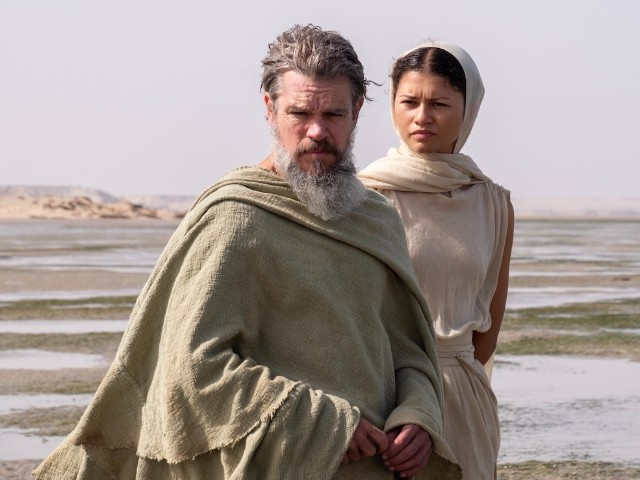
Emily Wilson, the acclaimed translator who brought a fresh, feminist lens to Homer's ancient epic, has a complicated take on Christopher Nolan's blockbuster adaptation of The Odyssey. Despite the film's staggering $260 million opening weekend and widespread critical praise, Wilson says she felt something essential was missing.
I want to celebrate that more people are aware of The Odyssey, Wilson told the Associated Press. But I had the sense that Christopher Nolan was trying to pack everything in while missing themes that were essential to the poem.
Wilson, a classical studies professor at the University of Pennsylvania, isn't alone in her critique. Other scholars and writers are questioning whether Nolan's vision truly honors Homer's work or simply remakes it in the director's own image.
What Did Nolan Get Wrong About Homer's Epic?
Wilson points to several specific omissions that trouble her. The film leaves out two major Greek gods, Zeus and Poseidon, which she sees as a significant loss. She also finds Nolan's messaging around war and cowardice incoherent, and notes that Penelope's role is so diminished that it puts any possibility of believing in this marriage at risk.
The dog scene with Argos, she adds, catered toward modern sentimentality. Everybody's a sucker for a dog, she said with a shrug.
Still, Wilson doesn't want to come off as snobby. She recommends the movie for others, as long as they see it in a theater. It was fun to be there with my kids, she said. I didn't feel it was pulling teeth to engage with it.
Why Scholars Say Nolan's Odysseus Is a Different Hero
Daniel Mendelsohn, an author and translator, goes further. In a sharp analysis published in The New York Review of Books, he argues that Nolan has merely remade Homer's hero in his own image, imposing values utterly foreign to the original poem.
In this Odyssey, there is no cleverness, no humor, no wily charm, Mendelsohn writes. The hero doesn't trick the Cyclops with his brilliant 'nobody' pun; he and his men just poke the giant's eye out and make a gridiron-inspired run for it.
He compares Nolan's tormented, guilt-ridden Odysseus to the director's other protagonists: the anguished amnesiac of Memento, Batman, and Oppenheimer. These are men agonized by pasts they wrestle with in different ways.
Author Gareth Hinds echoes this view, noting that the wily trickster and smooth talker of Homer's poem has become an everyman who appears to be honorable, except in select situations which then continue to haunt him. Hinds questions how much a director can change a main character before the story itself becomes something different entirely.
Is This a Clash Between Art and Commerce?
The debate raises a deeper question: Can a blockbuster film truly capture the nuance of an ancient epic? Or does the pressure to appeal to mass audiences inevitably flatten complex themes into something more palatable?
Wilson's critique suggests that Nolan's film, for all its spectacle, misses the soul of the poem. And Mendelsohn's analysis implies that the director's signature style, while visually stunning, may be ill-suited to Homer's world.
For now, the conversation is far from over. As Hinds put it: That's one of many interesting things Nolan has left us to ponder.
Frequently Asked Questions
Did Emily Wilson give Christopher Nolan's 'The Odyssey' a grade?
No. When asked by the Associated Press to grade the film, Wilson declined. She recommended it for others but stopped short of a formal ranking.
What specific themes did Wilson say Nolan missed?
Wilson cited the omission of major gods like Zeus and Poseidon, a diluted role for Penelope, and what she called incoherent messaging around war and cowardice.
Are other scholars critical of the film?
Yes. Daniel Mendelsohn and Gareth Hinds have both published critiques, arguing that Nolan's Odysseus lacks the cleverness, humor, and charm of Homer's original hero.