
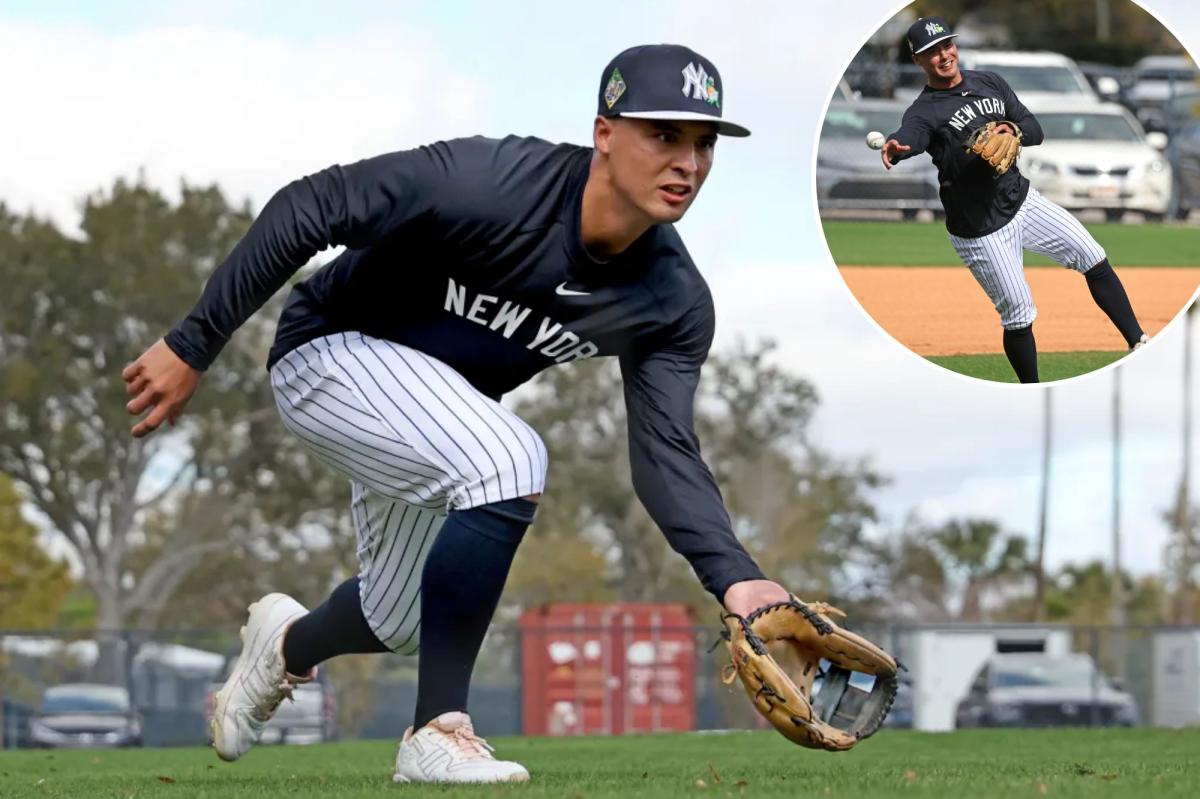
In an era where professional athletes often deflect criticism with injury excuses, New York Yankees shortstop Anthony Volpe is taking a different approach that speaks to broader questions about personal responsibility and resilience in our society.
Speaking publicly for the first time since undergoing surgery to repair a torn labrum in his left shoulder, the 24-year-old athlete demonstrated a level of accountability that transcends sports. Despite discovering that his injury was worse than initially diagnosed, Volpe refused to use it as justification for his subpar 2025 season.
The Power of Personal Accountability
"I know I could have played better," Volpe stated during Yankees spring training at George M. Steinbrenner Field. This simple admission carries weight in a culture where excuses often overshadow ownership of one's performance.
The injury, sustained during a defensive dive on May 3, 2025, significantly impacted Volpe's play throughout the season. His defensive capabilities, which earned him a Gold Glove as a rookie in 2023, deteriorated noticeably. Offensively, he struggled with a .212 batting average, .663 OPS, and just 19 home runs.
Yet Volpe's response reveals something profound about character development and self-awareness. "You definitely learn a lot about yourself," he reflected, acknowledging that playing through pain requires both mental fortitude and honest self-assessment.
Lessons in Resilience and Growth
Volpe's journey through what he described as "rock bottom" during the early stages of rehabilitation offers insights into how individuals can navigate setbacks while maintaining personal integrity. His approach to recovery has been methodical, focusing not just on the injured shoulder but on comprehensive physical preparation.
The shortstop's perspective on his situation reflects a mature understanding of professional responsibility. "I appreciate the accountability, I appreciate everything that comes with being the shortstop for the New York Yankees," he said, embracing rather than resenting the scrutiny that comes with his position.
A Model for Modern Leadership
As Volpe prepares for his return, likely in late April or early May, his handling of this adversity provides a template for how public figures can address failure and setbacks. Rather than seeking sympathy or external validation, he has focused on internal growth and preparation.
His statement that "the chip I've had on my shoulder has been there for my whole life" speaks to the kind of intrinsic motivation that drives meaningful change, both in sports and in broader social contexts.
In a time when accountability often feels scarce in public discourse, Volpe's approach offers a refreshing example of how individuals can take ownership of their circumstances while working toward improvement. His story reminds us that true leadership emerges not from perfection, but from how we respond to our imperfections.