
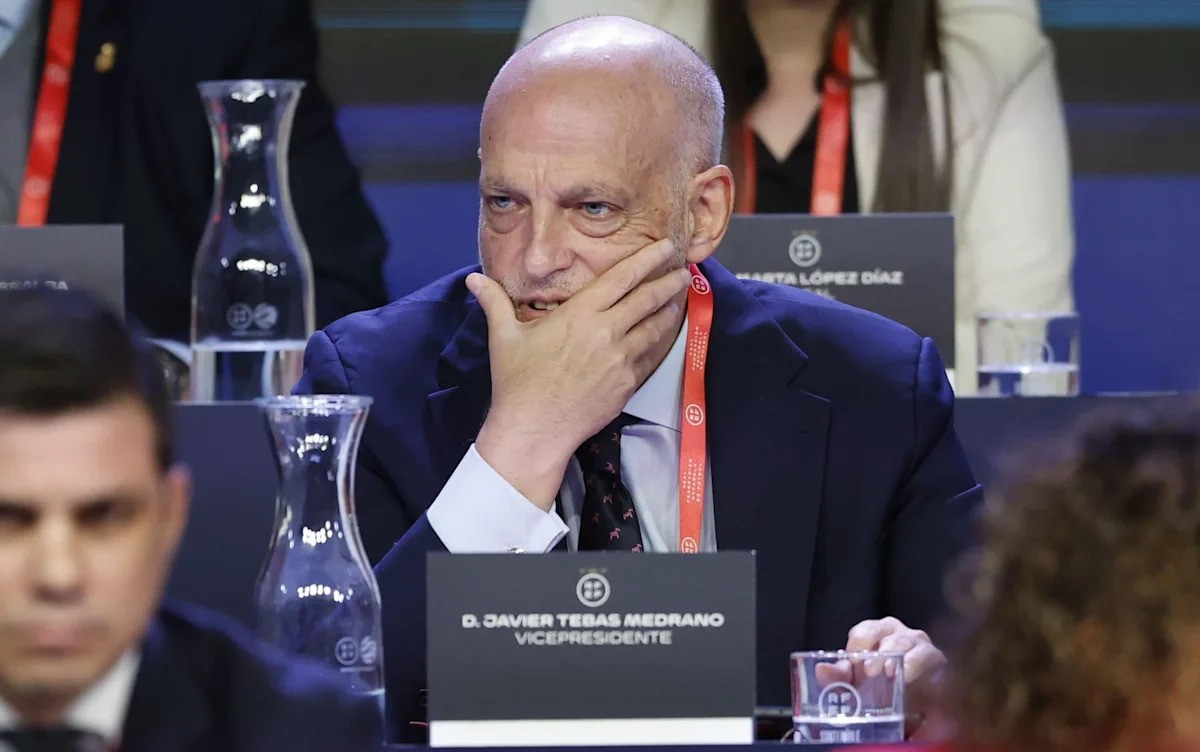
The dust has barely settled on the 2026 World Cup, and already FIFA is floating a proposal that has critics up in arms: expanding the tournament to a staggering 64 teams by 2030. La Liga president Javier Tebas didn't mince words, telling an Italian newspaper that FIFA is 'destroying the football industry' and calling for Gianni Infantino to step down. This isn't just a sports story. It's a story about power, money, and who gets to decide the future of a global game that millions of us love.
Why the push for a 64-team World Cup?
FIFA President Gianni Infantino has argued that expanding the tournament gives more nations a chance to dream. 'Every nation should be allowed to dream of participating in the World Cup,' he said in a recent interview. He pointed to the quality of teams in the 48-team tournament as proof that the expansion is working. But critics see a different motive: more games mean more broadcast rights, more sponsorship dollars, and more control for FIFA's leadership.
Alejandro Dominguez, head of CONMEBOL and a FIFA vice president, seemed to confirm the plan is a done deal. In a post on X, he wrote: 'The next one is at home! In 2030, the World Cup is coming to Uruguay, Argentina and Paraguay. It will be a great opportunity for football, to celebrate the World Cup's centenary with a 64-team tournament.'
What Tebas and other critics are saying
Tebas launched a blistering attack on Infantino, arguing that the World Cup expansion comes at the expense of domestic leagues. 'Increasing the number of national teams makes no sense,' he told La Gazzetta dello Sport. 'The football industry is not just the World Cup. It is national competitions that support this sport. They are destroying the football industry, the one that generates tens of thousands of jobs for an event that lasts 40 days and to which the minority of players go.'
He went further, accusing FIFA of a 'sick system' where no one dares to challenge Infantino. 'There is no opposition candidate, no one wants to present themselves to lose,' Tebas said. 'I don't know if silence or complicity is worse, because those who are silent are perfectly aware of the damage that football is suffering.'
The Balogun affair: a case study in FIFA's power
Tebas pointed to a specific incident that he believes could have brought Infantino down: the Folarin Balogun affair. The US striker received a one-match ban that was suspended by FIFA's disciplinary committee after a phone call from President Donald Trump to Infantino. This allowed Balogun to play in the World Cup round of 16 against Belgium. 'The suspension of the American player's disqualification is something of absolute gravity,' Tebas said. 'They were lucky because Belgium eliminated the USA, because otherwise a case could have been created that could have cost Infantino his job.'
What this means for fans and the sport
For fans, the expansion raises real questions about the soul of the game. Will a 64-team World Cup dilute the quality of competition? Will it further squeeze domestic leagues and player welfare? Ghana coach Carlos Queiroz called the 48-team expansion 'vulgar and ordinary.' And Tebas accused FIFA of using 'hydration breaks' as a cover for advertising time, noting that many stadiums in the US have air conditioning.
Infantino is expected to be re-elected for a fourth term in March, with no serious challenger in sight. But the debate over the World Cup's future is far from over. As Tebas put it: 'They don't realize, they decide irresponsibly.'
FAQ: What you need to know about the 64-team World Cup plan
Is the 64-team World Cup confirmed?
Not officially. FIFA President Gianni Infantino said the proposal 'will be examined and discussed' in relevant committees. But CONMEBOL's Alejandro Dominguez suggested it is already decided, posting on X that the 2030 tournament will feature 64 teams.
When would the 64-team World Cup happen?
The 2030 World Cup, which will be co-hosted by Morocco, Portugal, and Spain, with opening matches in Uruguay, Argentina, and Paraguay. The expansion would double the size of the tournament from 32 teams, which was the standard from 1998 to 2022.
Why are critics against the expansion?
Critics argue that it prioritizes FIFA's commercial interests over the health of domestic leagues and player welfare. They also worry about diluted competition and the growing influence of money in the sport. La Liga president Javier Tebas called it 'destroying the football industry.'