
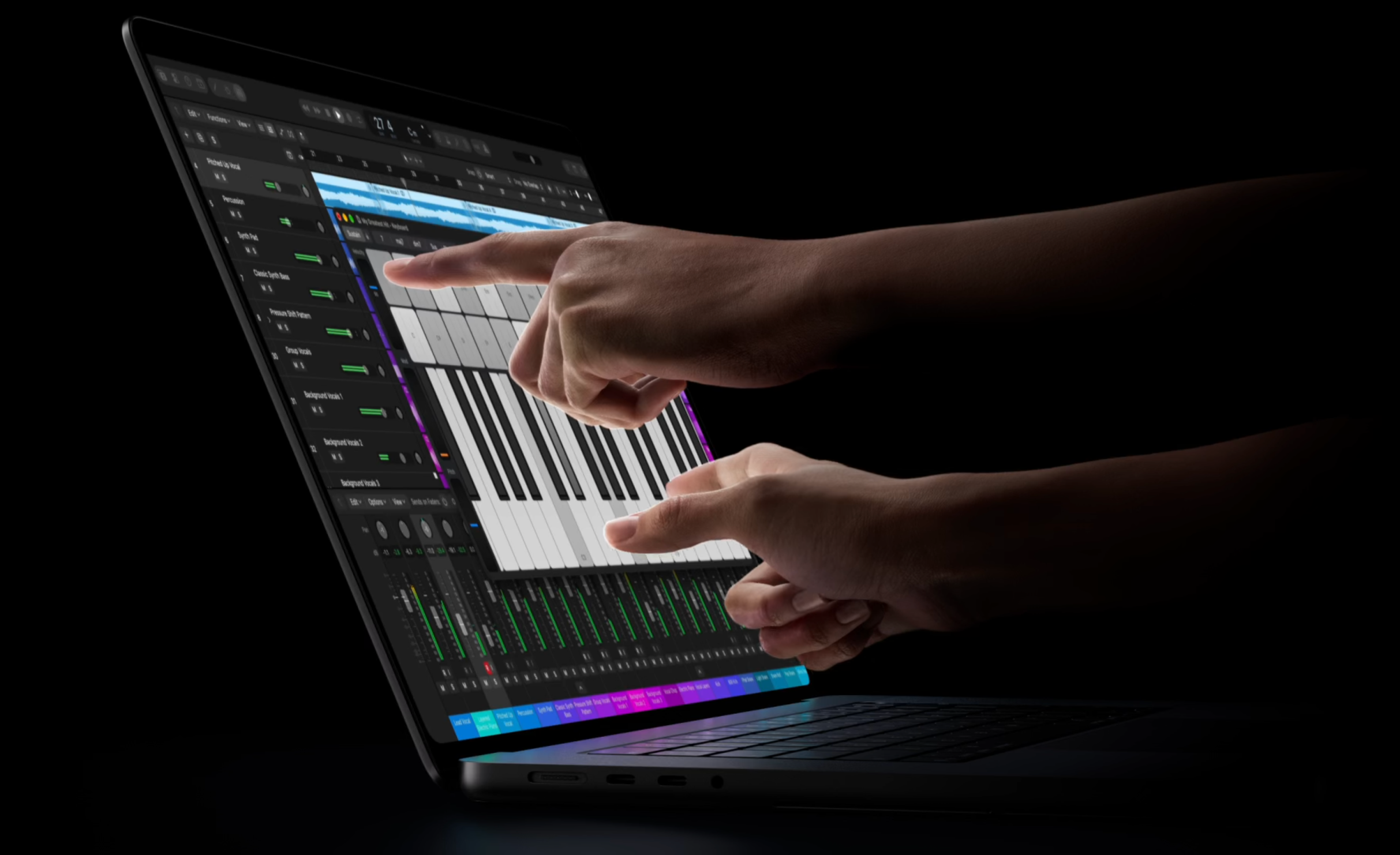
Apple's new touchscreen MacBook Pro, announced Wednesday and available November 6, can be configured all the way up to $14,549, a price that says a lot about who ultra-premium tech is actually built for. The machine starts at $2,899 for the 14-inch model and $3,399 for the 16-inch, according to CNET's pricing breakdown.
That top-tier figure is more than the cost of ten entry-level MacBook Air laptops. It also lands amid an AI-fueled spike in RAM and storage prices, which has pushed component costs up across the industry. For a publication that watches how money moves through the economy, the story here is less about the laptop than about who is expected to absorb these numbers.
What $14,549 actually buys
Start with the 16-inch PROLED XDR model at $3,399. The Nano-texture antiglare glass adds $150. Stepping from the M5 Pro's 20-core GPU to the M5 Max's 35-core GPU brings the running total to $4,949, and the 40-core version adds another $300. CNET's testing found the 40-core Max is the best fit for pro creatives working with 8K or raw video, data scientists, and heavy users of generative AI imaging and video.
Then memory and storage take over. The M5 Max ships standard with 48GB of unified memory and 2TB of storage. Upgrading to 128GB of memory adds $2,000. Adding 16TB of storage adds $7,000, the single most expensive line item, roughly doubling the price of the machine. Neither the memory nor the storage can be upgraded after purchase, so buyers have to lock in their choices up front.
“It's so expensive because 16TB drives cost a fortune, as does 128GB, and professionals have been paying those workstation prices for years,” Lori Grunin, CNET senior editor for computers and gaming hardware, told the outlet.
Even she thinks the value is thin at the top. “For that price, I'd expect the M5 Ultra chip. But I don't think they can put the Ultra in a laptop yet,” Grunin said.
Who spends this kind of money on a laptop?
The short answer: mostly not individuals. “It's for people who don't have to pay for it,” CNET Managing Editor Joshua Goldman said. Configured-to-order workstations like this are typically bought through enterprise procurement by companies, startups, and institutions, meaning the employer foots the bill.
Think engineering and architecture firms, Hollywood VFX and post-production houses, and AI and machine learning teams. These organizations have the budgets to absorb the cost and the workloads to justify the hardware. For context, Grunin pointed CNET to a Dell Precision workstation that can be configured past $18,000. Five-figure machines from HP and Lenovo are also standard in that market.
Well-heeled individuals will buy some of these configurations, but they are a small slice of sales. Most of the touchscreen MacBook Pros sold will sit at still-expensive but far more ordinary price points. MacRumors confirmed the same pricing structure, with fully configured machines pushing well above $14,000.
A first for Apple, and a question about value
The touchscreen itself is the headline feature. It marks the first time Apple has put touch input on a MacBook, a departure from the keyboard-and-trackpad formula the company has defended for years. Business Insider framed the touchscreen models as a major evolution of the traditional MacBook line.
But the touch feature alone doesn't explain the premium. PCWorld argued that the touchscreen lacks standout capabilities that justify the steep price for average users, noting that competing devices like Microsoft's Surface Laptop Ultra offer similar specifications. The outlet went further, suggesting ultra-premium laptops increasingly function as status symbols rather than practical upgrades. TechCrunch called the new model a new extreme in laptop pricing.
Why this matters beyond the tech pages
There is a familiar pattern here worth naming. When hardware prices climb past what any household would rationally spend, the market is quietly splitting in two: enterprise buyers who expense everything, and everyone else, who gets the entry-level configuration and a rising repair-and-replacement bill. The AI boom is a big part of the pressure. Demand for high-capacity memory and storage from data centers and AI developers has driven component prices up, and those costs flow downhill to ordinary consumers buying far cheaper machines.
Apple is not alone in this. Dell, HP, and Lenovo all sell five-figure workstations. But Apple's pricing has always carried an outsized cultural signal, and a $14,549 laptop announced in a stretch of flat wages and persistent inflation is a signal worth reading. The company is betting that institutions will pay, that professionals will demand the specs, and that the rest of us will keep watching from the cheaper seats.
The MacBook Pro ships November 6. The most expensive configuration, the 16-inch M5 Max with 128GB of memory and 16TB of storage, costs $14,549 before taxes.
FAQ
How much does Apple's new touchscreen MacBook Pro cost?
It starts at $2,899 for the 14-inch model and $3,399 for the 16-inch. A fully configured version with an M5 Max chip, 128GB of memory, and 16TB of storage costs $14,549.
When is the touchscreen MacBook Pro available?
Apple announced it on Wednesday, October 29, and it becomes available on November 6.
Why is the top configuration so expensive?
The 16TB storage upgrade alone adds $7,000, and the 128GB memory upgrade adds $2,000. AI-driven demand for memory and storage has pushed component prices higher across the industry.
Who actually buys a $14,549 laptop?
Mostly companies and institutions buying through enterprise procurement, including engineering firms, VFX studios, and AI research teams, rather than individual consumers.