Dermatologists and aestheticians are telling readers the same thing this October: swap lightweight summer products for hydration-heavy formulas, keep wearing sunscreen, and introduce new actives one at a time. "content": "Dermatologists and aestheticians are telling readers the same thing this October: swap lightweight summer products for hydration-heavy formulas, keep wearing sunscreen, and introduce new actives one at a time. According to ELLE, the seasonal reset matters because cooler air and lower humidity pull water out of the skin, leaving it tight, flaky, and irritated.
Why your skin reacts when the seasons change
Dr. Aya Ahram, a board-certified dermatologist at Hudson Dermatology and Laser Surgery, told ELLE that the biggest change she recommends is shifting from lightweight products to a routine built around hydration and barrier support. Lower humidity increases water loss through the skin, and the effects show up first on the areas people forget: lips, hands, and the body.
How your skin responds depends on your baseline. People with dry or sensitive skin may notice tightness, flaking, redness, and stinging as humidity drops, Ahram said.
Patients with eczema or rosacea may also experience more frequent flares and should prioritize gentle cleansing and barrier repair. If you have more oily skin, you still should moisturize your skin, although you might be able to get by with a water-based gel cream rather than a thicker cream.
What products should a fall skincare routine include?
Start with the cleanser. Ahram suggests trading a foaming formula for a gentler, hydrating one that does not strip the skin of its natural moisturizing factors. Real Simple makes the same case, pointing readers toward non-foaming, fragrance-free cleansers, such as the CeraVe Hydrating Facial Cleanser, which contains ceramides.
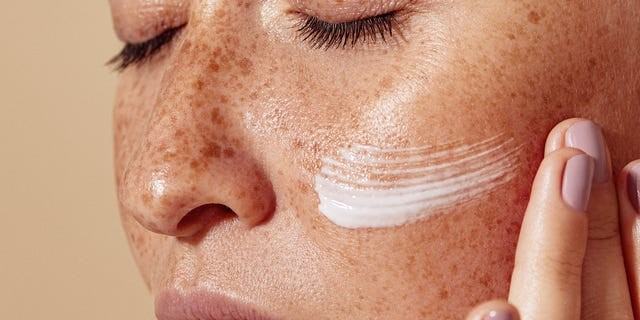
For moisture, Ahram recommends ingredients that attract and seal water in the skin: ceramides, glycerin, hyaluronic acid, and petrolatum, depending on skin type. Ceramides are lipids that maintain the skin's protective barrier and reduce dryness and irritation, while glycerin and hyaluronic acid draw water in and soften the fine lines that dehydration leaves behind.
Rachel Liverman, aesthetician and founder and CEO of Glowbar, recommends adding a hydrating serum and switching to a richer moisturizer. For hands and lips, Ahram said a richer hand cream and a plain ointment like Aquaphor or Vaseline prevents irritation before it starts. Naluda Magazine echoes the advice, suggesting a ceramide moisturizer applied on damp skin plus a balm for dry patches.
Is sunscreen still necessary in fall?
Yes, and both experts were firm on this point. UVA rays drive photoaging and pigmentation year-round, and incidental sun exposure adds up even on gray days.
Continue wearing sunscreen daily, since UVA rays contribute to photoaging and pigmentation year-round, and incidental sun exposure still adds up.
The one ingredient to add right now: retinol
If your core routine is set and you want one addition before spring, Liverman said make it a retinol. Fall's weaker sun gives skin time to build tolerance, though the ingredient can be drying and irritating at first. She suggested starting one or two times a week, paired with plenty of hydration.
Ahram agreed, noting that retinoids are among the best-studied topical ingredients for acne, uneven skin tone, and photoaging. They increase skin cell turnover and improve the look of fine lines and texture over time. Fall is also a good window for in-office procedures such as lasers and microneedling, she said, because skin faces less sun damage while it recovers.
Liverman said professional treatments and home care should work together, not against each other. In-office dermaplaning and chemical peels resurface the skin, while at-home exfoliants maintain results between visits. Bangstyle offers similar guidance on reviving a dull post-summer complexion through hydration and gentle exfoliation.
What to avoid as the weather turns cold
The most common mistake is doing too much at once. Liverman warned that layering retinol, exfoliating acids, new cleansers, and professional treatments simultaneously can overwhelm the skin and cause dryness and irritation.
A complicated routine isn't necessarily a better routine. A gentle cleanser, an appropriate moisturizer, sunscreen, and one well-chosen active ingredient can be more effective than a shelf full of products.
Ahram recommended introducing one new product at a time so you can identify the cause if irritation develops. Persistent burning, stinging, redness, and scaling are not signs a product is working better, she said. She also cautioned against stacking exfoliating products or scrubbing skin that is already peeling, since peeling usually signals a need for more hydration, not more exfoliation.
One last habit to break: long, hot showers. They worsen dryness as temperatures drop. Shorter showers with warm water, followed by immediate moisturizing, are the better play, Ahram said.
FAQ
When should you switch to a fall skincare routine?
As soon as cooler temperatures and lower humidity arrive, typically early to mid fall, because the skin starts losing moisture the moment the air dries out.
Do you need sunscreen in fall and winter?
Yes. Ahram said UVA rays contribute to photoaging and pigmentation year-round, so daily sunscreen remains non-negotiable even after summer ends.
Can you use retinol if you have dry or sensitive skin?
You can, but barrier repair comes first. Ahram advised prioritizing ceramides, glycerin, and hyaluronic acid before adding retinoids, then starting slowly, one or two nights a week.